
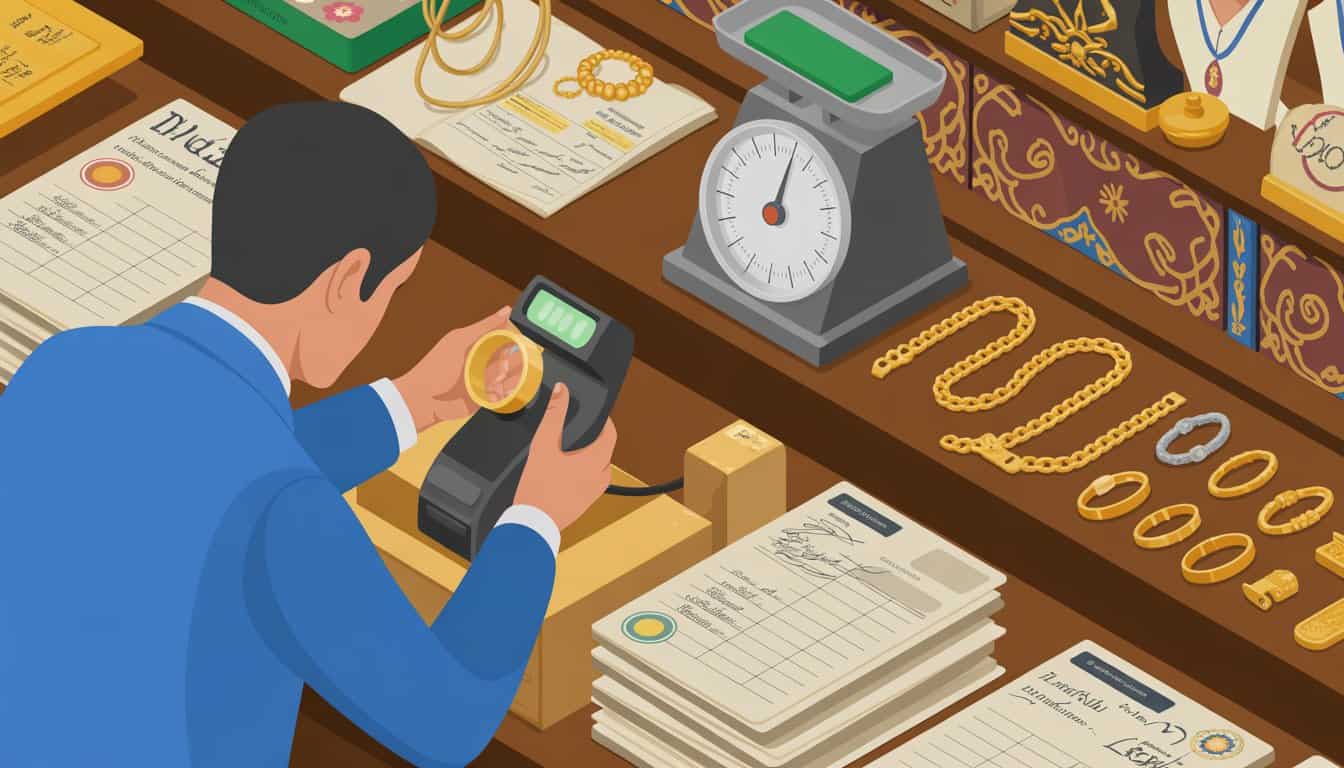
Understanding the gold authentication process at pawn shops
You want to know if that gold chain or ring is the real deal before you accept a price or a pawn loan — smart move.
At pawn shops, authentication is a mix of quick visual checks, a few simple chemistry or electronic tests, and paperwork to satisfy both you and local regulators. Think of it as a short, efficient detective story: no CSI lab, but enough tools to tell genuine from glitter. Related source: gold authentication process at pawn shops.
Authentication here balances speed with accuracy because pawnbrokers must buy or lend against jewellery quickly while minimising risk. The most common methods you’ll encounter are hallmark inspection, acid (touch) tests, and increasingly, X-ray fluorescence (XRF) or other electronic assays. Each has pros and cons; knowing them makes you look sharp and helps you get better outcomes lah. Related source: aienbgroup.com.
Step-by-step authentication process you’ll see at pawn shops
Initial inspection and paperwork
When you first hand over an item, the pawnbroker will check your ID and record details — standard procedure required by local rules to prevent stolen-goods trade. You should expect a clear description to be logged, so have any receipts or certificates ready to speed things up. For broader background on consumer protection and regulation, the paperwork step is part of that same careful approach.
Visual and hallmark checks
Next, the staff inspects the piece under magnification for hallmarks (e.g., 916, 750) and signs of repair, plating, or odd weight. Hallmarks are useful but not foolproof — fake stamps exist — so they’re a first filter rather than a final verdict.
Acid (touch) test
The acid test involves scratching a tiny area on a test stone and applying nitric or aqua regia solutions to see how the metal reacts; different karats react differently. It’s cheap and quick, but mildly destructive (a microscopic scratch) and can be fooled by plated items, so it’s often paired with other methods.
XRF and electronic assays
Modern shops use X-ray fluorescence (XRF) analyzers that read the metal composition without damaging the item — you’ll usually see a handheld gun pointed at the jewelry. XRF gives a fast, non-destructive composition readout and is reliable for karat estimation; the World Gold Council explains the technology and its limitations for surface versus bulk readings (see source).¹
Weighing and net weight calculation
After confirming composition, the jeweller or pawnbroker weighs the piece on a precision scale to calculate pure-gold content (gross weight × fineness). Expect them to subtract stones, settings, or obvious non-gold parts from the effective gold weight — that’s how offers are computed. For a quick practical reference on public process timing, see how holiday schedules can affect opening hours.
Final valuation and posting (offer or loan)
Finally, the shop applies the current gold price (often a daily spot reference), their margin, and any fees to generate an offer or loan amount. If you disagree, ask for a clear breakdown — transparency is your friend, and good pawnbrokers should give it without drama.
Practical tips to improve your skill and get better outcomes
Want to come across like you know what you’re doing and walk away with a fairer offer? These tactical tips help you avoid common pitfalls and get the best from the authentication process.
Bring provenance and documentation
Receipts, certificates, and photos of purchase or previous appraisals reduce suspicion and speed authentication — shops will often pay more or lend more against items with solid provenance. Even a simple receipt can make you look professional and may improve the offer, especially for branded pieces. If you need help with a shop, Get in touch.
Know the tests and ask smart questions
Ask which tests they’ll run (hallmark check, acid, XRF) and whether the test is non-destructive — if it’s acid, request a less visible test area. Knowing terms like “fineness,” “karat,” and “XRF” signals you’re not easily fooled and encourages clearer explanations from staff.
Prepare the item and manage expectations
Clean jewellery gently before you go — dirt and grime can obscure hallmarks and make staff suspect plating. But don’t over-polish or alter it; pawnbrokers can penalise obvious tampering. Also, accept that pawn offers will be below retail because the business must resell; aim for a realistic negotiation, not delusions of grandeur. Please review the Terms and Conditions before you proceed.
Choose the right pawn shop and know regulations
Pick established, well-reviewed shops that use electronic assays and give clear paperwork. In Malaysia, pawnbrokers operate under regulatory rules overseen by consumer and trade authorities, so check for licensing and compliance if you’re unsure (see local regulator).²