
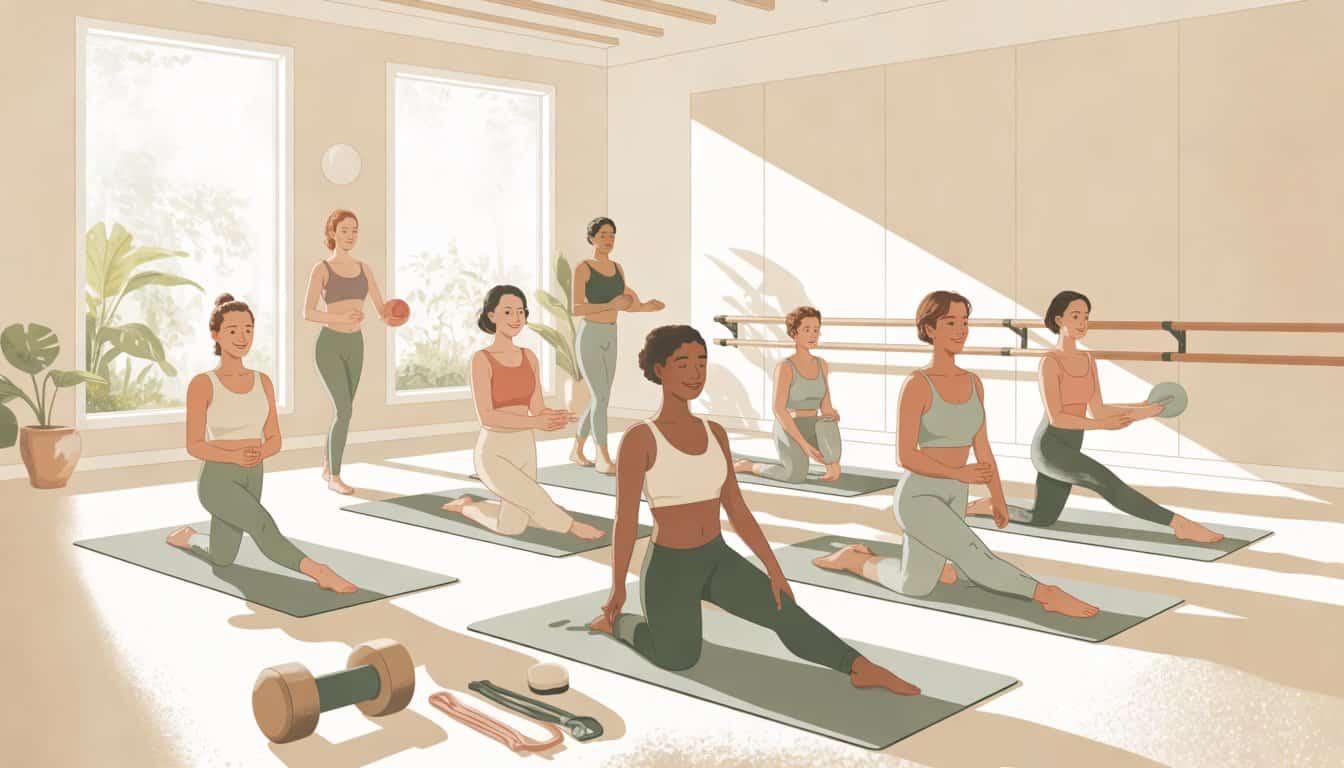
What Pilates Barre Is and Why I Think People Compare Them
When I first heard pilates barre mentioned in the same breath, I assumed they were basically the same thing. In reality, they are related but not identical. Both focus on low-impact, controlled movement, and both can feel surprisingly intense even though they look gentle from the outside. That is why people often compare them before deciding which class to try.
In simple terms, Pilates usually centres on core control, posture, breathing, and precise movement patterns, while barre leans more on small-range, repetitive exercises inspired by ballet and strength work. If you are new and just want to choose a class that fits your body, schedule, and fitness style, understanding these differences can save you some trial-and-error.
According to the Cleveland Clinic, Pilates is a low-impact exercise method that can help improve strength, posture, and flexibility, especially when done consistently and with good form. Barre classes also emphasise muscular endurance, balance, and alignment, though the format can vary depending on the studio and instructor. That means the better choice usually depends on what you want most from your workout. Cleveland Clinic
How Pilates and Barre Feel Different in a Beginner Class
If I were trying both for the first time, I would expect Pilates to feel more structured and technical, while barre would feel a bit more rhythmic and burn-focused. Pilates classes often use mats or equipment like reformers, with an emphasis on control, breath, and alignment. Barre classes usually stay near a ballet barre or chair and rely on pulsing, holds, and repetition.
For beginners, Pilates can feel easier to scale because the movements are usually introduced step by step. Barre can still be beginner-friendly, but the constant small pulses and isometric holds may surprise you with how quickly your muscles get tired. Neither one needs dance experience, despite the ballet-inspired look of barre.
In my view, the main question is not which one is “harder” overall, but which sensation you prefer. If you like focused movement and a slower pace, Pilates may feel more approachable. If you enjoy a steady muscle challenge and upbeat class energy, barre may suit you better.
Benefits, Limitations, and Who Each Workout Suits Best
Why I Would Choose Pilates
I would lean towards Pilates if my goal were better core awareness, posture, and movement quality. It is often a good fit for people who want a methodical workout that teaches body control and can be adapted across different fitness levels. Many people also like Pilates because it tends to feel restorative while still building strength.
For beginners, one benefit of Pilates is that the exercises can be modified quite a lot. You can slow things down, reduce the range of motion, or use props for support. That makes it a practical option if you are easing back into exercise or simply prefer a more precise style of training.
Why I Would Choose Barre
I would choose barre if I wanted a workout that feels more like a sustained muscle challenge, especially for the legs, glutes, and small stabilising muscles. Barre class KL often use lots of repetitions, pulses, and holds, which can create a deep burn without heavy weights. Some people love that feeling because it makes the workout feel efficient and energising.
Barre can also be a nice option if you enjoy a class atmosphere with music and flowing transitions. It may be especially appealing if you want something that feels graceful but still challenging. The trade-off is that beginners may need a little time to get used to the tiny movements and maintaining form while the muscles start to fatigue.
How I Compare Them for Different Goals
If I wanted better posture, core stability, and careful movement mechanics, I would probably start with Pilates. If I wanted muscular endurance, leg endurance, and a class that feels more like a sculpt-and-sweat session, I would probably try barre first. Both can support general fitness, but they emphasise different outcomes.
For cross-training, they can actually complement each other quite well. Pilates may help me move better and build control, while barre may help me hold positions longer and strengthen smaller supporting muscles. If I were choosing only one to begin with, I would base it on whether I want precision or burn.
How to Choose Between Pilates Barre and What to Expect from Your First Class
When I compare pilates barre options as a beginner, I look at class style, equipment, and coaching approach. Some studios blend elements of both, while others stay more traditional. Before signing up, I would check whether the class is mat-based, reformer-based, or barre-focused, because the experience can feel very different.
For a first class, I would wear comfortable fitted clothing so the instructor can see my alignment, and I would expect to move slowly enough to learn the basics. It also helps to tell the instructor that I am new, because they can often suggest safer modifications. Most importantly, I would not expect to “get it perfect” on day one.
If I had to keep it simple, my advice would be: choose Pilates if you want control, alignment, and a more structured progression; choose barre if you want a quicker muscle burn and a class with a dance-inspired feel. Either way, the best option is the one I can do consistently and enjoy enough to come back to. For general physical activity, consistency matters more than chasing the most intense class. World Health Organization